The other day Beth and I decided to just list off the top of our heads things we've done that are homestead related...and we ended up with 100...I think there are more...but just for fun:
Things we’ve done ourselves (together or separately):
Gave birth to 3 children at home
Raised our own pigs
Butchered a pig
Butchered chickens
Raised egg laying chickens
Built a coop
Built a screen room
Made bread from scratch
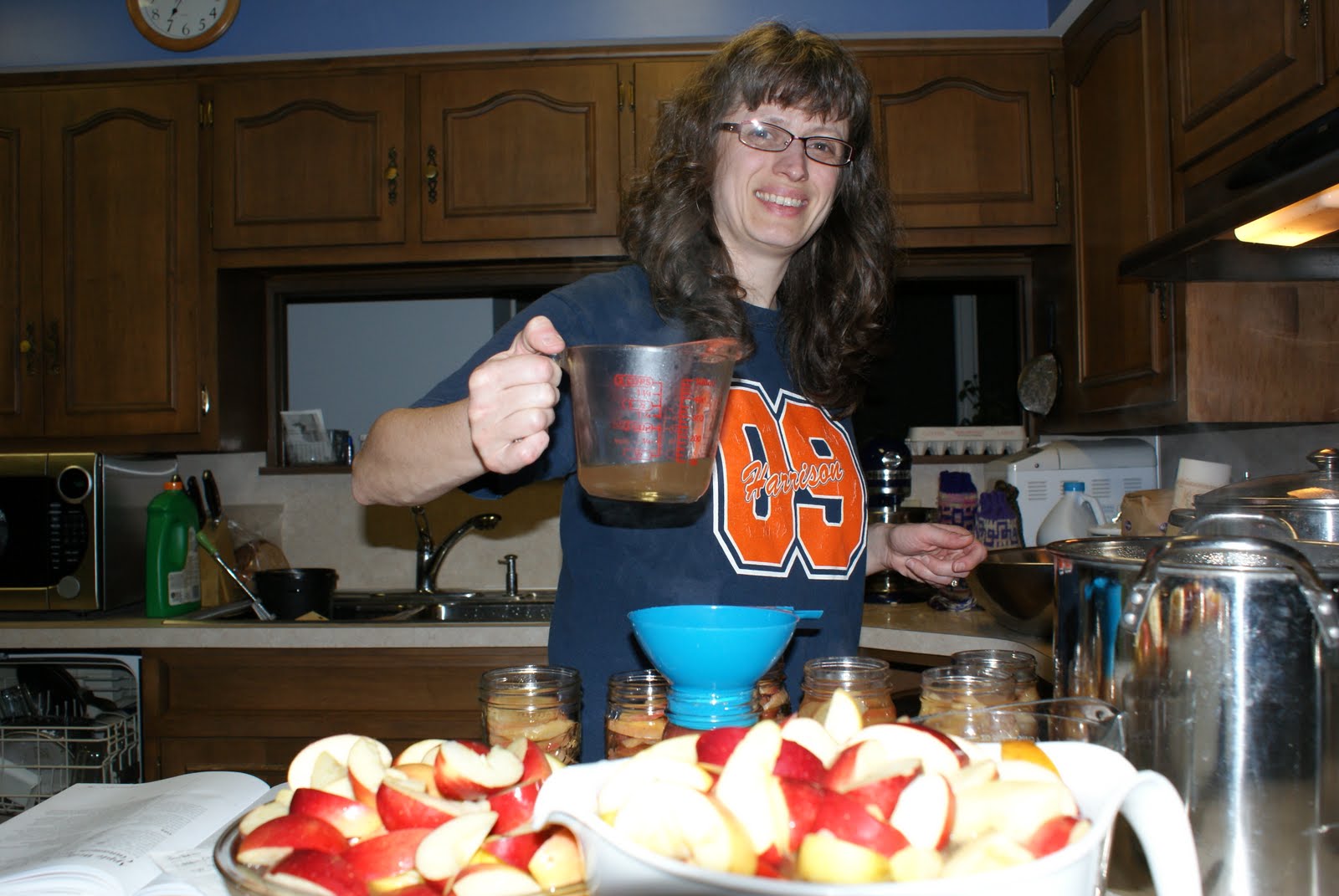
Preserved all kinds of foods including pickles, dilly beans, apples tomatoes and jams
Grow gardens
Knitted socks, sweaters and more
Restored a prairie
Installed flooring
Installed a home theater
Installed slate flooring
Painted our own house
Installed a wood burning furnace
Felled and split firewood
Killed rabid raccoons and an interloping rat
Remodeled a basement
Built fences
Change our own oil
Repaired radiator hoses
Replaced alternators and spark plugs
Fixed flat tires
Removed stitches
Made herbal medicines
Dyed with Henna
Made a self-watering container
Made a raised bed
Herded pigs
Loaded pigs
Made apple cider
Do our own taxes
Did my own divorce
Started my own business
Fixed our own computers
Did electrical wiring
Made pottery
Recorded our own cd
Made an instructional video
Repaired brake and light hookups for trailer while on the road
Repaired weight distribution bracket for camper while in Missouri
Wrote poetry
Delivered babies
Made doughnuts from scratch
Created websites
Taught guitar classes
Taught outdoor skills classes
Taught childbirth classes
Spun yarn
Fixed bicycles
Got out of debt
Fixed lawnmowers (too many times)
Patched the driveway
Sprouted vegetables and herbs to plant in garden
Made dandelion wine
Planned conferences
Cooked a lot of meals from scratch
Recycle most of our waste
Built a composting toilet
Repaired toilets
Repaired drywall
Navigated with real maps not GPS
Installed egress window in basement
Installed programmable thermostat
Transported & raised bees
Extracted and bottled honey
Made bath salts
Foraged for wild foods
Built a trail through the woods
Hunted for mushrooms
Rescued an unhatched chick
Nursed injured animals to health
Groomed our dog
Biked to work
Trimmed hair
Disinfected our well
Tested well water
Watered animals from creek
Mastered pie crust
Created a recipe
Remineralized a tooth
Constructed a masonry floor with antique bricks
Cleaned our chimney
Repaired shower tile
Installed ceiling fans
Installed larger oven and resized wall opening
Put in whole house water filter
Installed & configured computer & phone network
Reclaimed outdoor furniture
Made yogurt
Sprouted seeds to eat
Did newborn exams and screening
Did community presentations on healthy homes and water quality
Coached softball
Built a birthing replica for demonstration
Did our own business accounting
Canoed the Wabash & Blue River and Big Pine Creek
Made homemade ice cream
Wednesday, April 14, 2010

Friday, March 26, 2010
Dyeing with Plants
I bet you think this is going to be about fiber. You know, knitting, spinning, dyeing and all that jazz? Well it's not going to be about that. It's going to be about....HAIR!
Yep, that's right. Hair.
Maybe this doesn't seem like something you'd read about on a blog about homesteading, but I find that I am interested in anything that allows me to be more independent. In fact we were thinking of making a list of "do-it-yourself" things we have actually done ourselves, but I'll leave that for another day. For now I want to tell you about my natural dyeing experience.
If you haven't noticed, hair coloring is really hot right now. I think maybe more than ever before. A long time ago, I used to think that hair coloring was something fake that people used to make up for not being happy with themselves. Not blond enough. Not young enough. You get the idea. I rather prided myself on the idea that I didn't need to do that kind of stuff; I would just be happy with myself the way I happened to be.
Then I had kids. And they opened my eyes up to the fact that today changing your hair color is like deciding what color of fingernail polish to wear was when I was their age. My older daughter went from bleach blond, to BLACK, to her current black/red combo and she's really hoping for fire engine red this summer. She has helped me see that changing your hair color doesn't have to mean you are unhappy with the natural you; but that it's ok to have fun & experiment and try new things-- and that can be liberating. In her world your hair color can be as changeable as which concert t-shirt she chooses to wear--Kelly Clarkson one day; Iron Maiden the next. No boxes or boundaries!
Both of my daughters have been trying to get me to color my hair for quite some time. But really, even though I thought it sounded fun (and a little bit daring!) I just couldn't see me really buying a box of L'Oreal and doing that. It just wasn't me.
One day I happened across the Henna for Hair website. And I couldn't quit browsing and looking at all of those thumbnails of vibrant glowing hair color. I looked at "before & after" pictures; I looked at the individual mixes of herbs and everyday household items that people used to color their own hair. This was starting to speak my language. Like making herbal infusions for physical health, this was another kind of herbal infusion for hair health! I was hooked.
After lots of reading & thinking about which colors I liked, I ordered some henna and indigo. Being a very brave person, I tried them out on my daughters! Dare I say this was about a YEAR ago? After having fun with my daughters' hair, I left the henna & indigo packets in a closet in a back room almost forgotten. Fun as it had been I was still clinging to my purist, natural ideas--plus I was kind of afraid of doing something I wouldn't like. I like my hair. I know my husband likes my hair. I didn't want to mess it up. And when it comes to change, well I'm a pretty slow mover.
I'm not sure why I finally found my henna mojo. But a couple of weekends ago I got the urge to try it. I pored over the Henna for Hair website again reminding myself how to do it. Doing a henna treatment takes time and pre-planning. Unlike a commercial hair dye, henna needs to be mixed up the night before with several hours to let the dye release. Then you need time the next day to apply the henna, something I couldn't have done by myself. Then you need a few hours to let it sit on your hair. Then you need a rather major shampooing treatment to get it off. So with time ahead of me and a bit of courage, I mixed my henna with lemon juice and let it sit in a warm place over night.
In the morning I mixed in indigo to tone the red down a bit and make it darker. After a few minutes of trying to apply it myself I called on Colleen for help. She applied the henna paste layer by layer to my hair. To be positive, the mixture looked a lot like mud; to be more realistic it looked quite a lot like baby poop. The more my hair was coated the heavier my head became. After my head felt about 5 pounds heavier, we piled my henna coated hair on my head & wrapped it in plastic wrap and a towel. Then I just had to wait. And wonder. I didn't take any pictures of this process...I was still pretty chicken about the whole thing. I wasn't sure I'd want to document it publicly or otherwise.
A few hours later when I couldn't stand it anymore, I decided to take the plunge, literally, and got in the shower. I can't really describe what happened when the spraying water hit my head. I was suddenly immersed in a mud bath like I've never experienced before. It was really like being in a mud waterfall. Muddy looking water was running all over me, the shower, and everything. I was not prepared for that! It was quite a shock at first. But after a few shampoos and lots of conditioning, the water was running clear and I was ready to see how it worked!
I could only see my water darkened hair that really didn't look very different than it usually looks. But when I looked in the mirror I could see a glow around my face that was new and different. When my hair dried I could see that the grayest hairs, especially around my face and bangs, were a fairly bright copper. And the hair that was already brown was now a more glowing auburn. Plant dyes are different than commercial hair dyes in that they soak into the hair and actually dye it, instead of just coating and covering it. So with plant dyes, the hair retains it's natural pattern of highlights and shading nuances; they are just a different color, but the natural variation is still there. I really loved how my gray strands became coppery highlights! And my hair felt conditioned & soft and well ... just healthy!
Many people who have a history of using commercial hair colors say it is hard on their hair and leaves it feeling brittle and dry. But the natural henna and indigo are actually conditioning and contribute to hair health. Since I've never done the commercial dye I can't speak to that, but I can say that my hair has felt full and healthy since doing my henna treatment. I feel great about being able to care for my hair in a natural way. And I love being able to use natural plants and to take care of my hair myself. I do a lot of things that I like feeling ownership of, like making nettle infusions for their nourishing qualities or baking fresh bread for my family. It just feels good to know I can use things that nature provides to take care of my needs. And it feels good to know I can do it myself. Now I have found another one to add to the list! Henna!
Yep, that's right. Hair.
Maybe this doesn't seem like something you'd read about on a blog about homesteading, but I find that I am interested in anything that allows me to be more independent. In fact we were thinking of making a list of "do-it-yourself" things we have actually done ourselves, but I'll leave that for another day. For now I want to tell you about my natural dyeing experience.
If you haven't noticed, hair coloring is really hot right now. I think maybe more than ever before. A long time ago, I used to think that hair coloring was something fake that people used to make up for not being happy with themselves. Not blond enough. Not young enough. You get the idea. I rather prided myself on the idea that I didn't need to do that kind of stuff; I would just be happy with myself the way I happened to be.

Then I had kids. And they opened my eyes up to the fact that today changing your hair color is like deciding what color of fingernail polish to wear was when I was their age. My older daughter went from bleach blond, to BLACK, to her current black/red combo and she's really hoping for fire engine red this summer. She has helped me see that changing your hair color doesn't have to mean you are unhappy with the natural you; but that it's ok to have fun & experiment and try new things-- and that can be liberating. In her world your hair color can be as changeable as which concert t-shirt she chooses to wear--Kelly Clarkson one day; Iron Maiden the next. No boxes or boundaries!
Both of my daughters have been trying to get me to color my hair for quite some time. But really, even though I thought it sounded fun (and a little bit daring!) I just couldn't see me really buying a box of L'Oreal and doing that. It just wasn't me.
One day I happened across the Henna for Hair website. And I couldn't quit browsing and looking at all of those thumbnails of vibrant glowing hair color. I looked at "before & after" pictures; I looked at the individual mixes of herbs and everyday household items that people used to color their own hair. This was starting to speak my language. Like making herbal infusions for physical health, this was another kind of herbal infusion for hair health! I was hooked.
After lots of reading & thinking about which colors I liked, I ordered some henna and indigo. Being a very brave person, I tried them out on my daughters! Dare I say this was about a YEAR ago? After having fun with my daughters' hair, I left the henna & indigo packets in a closet in a back room almost forgotten. Fun as it had been I was still clinging to my purist, natural ideas--plus I was kind of afraid of doing something I wouldn't like. I like my hair. I know my husband likes my hair. I didn't want to mess it up. And when it comes to change, well I'm a pretty slow mover.
I'm not sure why I finally found my henna mojo. But a couple of weekends ago I got the urge to try it. I pored over the Henna for Hair website again reminding myself how to do it. Doing a henna treatment takes time and pre-planning. Unlike a commercial hair dye, henna needs to be mixed up the night before with several hours to let the dye release. Then you need time the next day to apply the henna, something I couldn't have done by myself. Then you need a few hours to let it sit on your hair. Then you need a rather major shampooing treatment to get it off. So with time ahead of me and a bit of courage, I mixed my henna with lemon juice and let it sit in a warm place over night.
In the morning I mixed in indigo to tone the red down a bit and make it darker. After a few minutes of trying to apply it myself I called on Colleen for help. She applied the henna paste layer by layer to my hair. To be positive, the mixture looked a lot like mud; to be more realistic it looked quite a lot like baby poop. The more my hair was coated the heavier my head became. After my head felt about 5 pounds heavier, we piled my henna coated hair on my head & wrapped it in plastic wrap and a towel. Then I just had to wait. And wonder. I didn't take any pictures of this process...I was still pretty chicken about the whole thing. I wasn't sure I'd want to document it publicly or otherwise.
A few hours later when I couldn't stand it anymore, I decided to take the plunge, literally, and got in the shower. I can't really describe what happened when the spraying water hit my head. I was suddenly immersed in a mud bath like I've never experienced before. It was really like being in a mud waterfall. Muddy looking water was running all over me, the shower, and everything. I was not prepared for that! It was quite a shock at first. But after a few shampoos and lots of conditioning, the water was running clear and I was ready to see how it worked!
I could only see my water darkened hair that really didn't look very different than it usually looks. But when I looked in the mirror I could see a glow around my face that was new and different. When my hair dried I could see that the grayest hairs, especially around my face and bangs, were a fairly bright copper. And the hair that was already brown was now a more glowing auburn. Plant dyes are different than commercial hair dyes in that they soak into the hair and actually dye it, instead of just coating and covering it. So with plant dyes, the hair retains it's natural pattern of highlights and shading nuances; they are just a different color, but the natural variation is still there. I really loved how my gray strands became coppery highlights! And my hair felt conditioned & soft and well ... just healthy!

Many people who have a history of using commercial hair colors say it is hard on their hair and leaves it feeling brittle and dry. But the natural henna and indigo are actually conditioning and contribute to hair health. Since I've never done the commercial dye I can't speak to that, but I can say that my hair has felt full and healthy since doing my henna treatment. I feel great about being able to care for my hair in a natural way. And I love being able to use natural plants and to take care of my hair myself. I do a lot of things that I like feeling ownership of, like making nettle infusions for their nourishing qualities or baking fresh bread for my family. It just feels good to know I can use things that nature provides to take care of my needs. And it feels good to know I can do it myself. Now I have found another one to add to the list! Henna!

Friday, March 12, 2010
Wood, wood, wood, how much wood could a....
 Lately I've been doing a lot with wood. Cutting trees, chopping wood, stacking wood, burning wood. If you have followed previous posts, you know that we installed an EPA rated wood burning furnace last autumn. It has been great! Our home feels warmer, and I estimate that we have saved about $1300 on the propane that we did not need to use this winter. After including the federal tax break, I believe this furnace will pay for itself in two winters of use. With the exception of one pickup truck load of wood that we recently purchased (and Elizabeth got to help with), all of the wood we've burned we have personally harvested locally from dead trees.
The past month, I've been cutting a few trees that are starting to die, or are increasingly blocking sunlight into our small clearing where our gardens are located. The cool thing is that we will be using the larger sections to split and burn in future winters. The smaller diameter limbs will be serving to produce a variety of mushrooms - something I've been talking about trying for several years. Cutting, splitting, hauling, and stacking wood is something I've done since I was a little kid - and now my kids can get a little of that "split-rail value" experience...they are not amused. There is just something great about the smell of newly split wood, the differences between species, the good feeling of the ache in your muscles knowing you are able to heat your home without the gas man next year.
I'll be posting in the future about the mushroom production....but next up we will be building some new garden beds with cold frames, and getting ready for honey bees. We are also trying our hand at sprouting our own veges....starting with sweet and hot pepper plants. Oh, and we just doubled our chicken flock with five new hens. Lots of exciting projects and photos coming up!
Friday, January 1, 2010
Really Old Green Technology - Hot Water Bottles
 If your sheets or feet feel cold on a winter's night, we highly recommend the use of a hot water bottle, sometimes called a hottie in the UK. This small rubber water bottle contains about 1-2 quarts of hot water heated on the stove, and we covered it with a flannel cover (cost about $10 for the bottle and a few more $ for a cover). This will give you instant warm sheets by your toes! Just tuck it in a few minutes before bed. It radiates the heat all night. Before we installed our wood burning furnace, we allowed the winter temperatures in our home to drop down to 60 F during sleeping hours. We used a hot water bottle nearly every evening. It allows us to save energy, yet remain comfortable all night. Our programmable thermostat kicks on the heat around 5:30am and gets the house warmed up again before we get out of bed. This is truly green technology that works, and the rubber bottle will last at least several generations. It isn't new, but it is a time tested way of staying warm all night while your furnace remains off.
Go one more step and cover your bed with a feather-down comforter. For cool spring or late fall such a comforter alone will keep you toasty. Add the hot water bottle once winter kicks in. You can't beat this combination (unless you factor in skin-skin contact). You'll save money and fossil fuels all winter and your feet will thank you.
Tuesday, December 1, 2009
Nectar of the Gods
 We had the good fortune of trading some of our pork for beef that friends of ours, Linda and Rick, had recently purchased from an area organic farm. We offered to trade more pork for some of the apple cider they made, when they said there were plenty more apples to pick! So, with our three children, and a few friends of Linda we all went and picked more apples two Sunday's ago. I do not ever recall being able to pick apples this late in Indiana. The trees we picked from were dwarf apple trees that were easy to reach. Some of the trees were absolutely loaded with amazing fruit. The abundance and goodness was almost mind altering, as I ran from variety to variety tasting the fruit. In less than one hour our family alone had picked more than 200 pounds of apples. I felt like this was a little bit of Eden that I was experiencing.
We proceeded on to Rick and Linda's homeplace to process the apples into cider. Making cider was a first for Beth and me. The elegantly built and conceived cider press worked efficiently with only our muscle power...and it was easy to use....as long as I remembered to close off the netting in the bucket and switch out drain pans on time. With a tasting glass, we sampled the various mixes of apples being squeezed into what I like to call the Nectar of the Gods. There is nothing quite like the delectable taste of fresh apple cider. Some batches were very light colored and smooth, and other batches were dark and hearty. We seemed to acheive about 10-11 gallons of cider with one hundred pounds or so of apples. We kept back the rest to process and freeze for apple pies and apple sauce, and a few for just eating through the winter as long as they last...an apple a day does the body good.
Friday, November 20, 2009
Heating Our Home with Wood
 This past summer we had our roof re-shingled due to the massive hail storm damage (see blog post from June). While the shingles were off and several plywood sections needed to be replaced, we had the contractors (my cousin's business Triple L contruction) insulate the attic. We brought the insulation level from R19 to over R40. This made a big difference in the energy needs of our house! It has felt cooler in the summer, and retains heat better thus far in the winter. Our windows are another story...single pane from 1969. Beautiful to look out of over the wooded landscape, but terrible in terms of energy efficiency.
In addition to the extra insulation, we also started to seriously consider using wood to help heat our home. Propane prices have increased greatly, along with all other fossil fuel prices. I don't think we'll ever see fossil fuel prices go back down. They are certain to increase greatly over time. The total price we pay now for LP each heating season has tripled in the 8 years we've been in the house! This, despite keeping nighttime temps quite low, and daytime temps low when we are not in the home during winter week days. We had installed a programmable thermostat which made things very convenient. However, we do live in a woods and do have some access to dead trees we could consider for heating our home.
Our ancient fireplace insert is quite small and not very efficient. It adds some ambiance and does help warm part of the living room area. After researching outdoor wood furnaces that can heat the home and the water we would use, we decided the $10,000 + investment was not the best choice at this time. We found an indoor wood burning furnace that will integrate with our current gas furnace for the best of all worlds. It is also EPA approved for efficiency (up 76%) and low emissions. We spent a lot of time working on the installation...and it still is not completely electrically installed. Beth has had visions of me as the father on The Christmas Story, going to the basement to kick, scream, and cuss out the furnace on a daily basis. The directions are very vague, and looks like we'll need to hire an expert to get it compeltely hooked up and running properly. It's really, really hard for me to admit defeat. But, I think we need to call in an expert before I get socked to death.
This has not deterred me from USING the wood furnace. Other than one day where the gas furnace malfunctioned and continously heated the house to about 85 degrees, we have not used any lp gas this season. The wood furnace does take more oversight, but I've been really impressed by how much heat and how long it will burn a load of wood.
The other aspect of this is that I need to get out there and cut, haul, and split wood a LOT more. this is a lot of time and muscle required, but also is good honest work (and might help keep me in shape). It feels good to know I can gather the necessary resource for heating our home locally. The trees are a renewable source of energy, as long as we harvest respectfully and utlize this sustainable source responsibly. On the economic side, I've estimated we'll save over $1,000 dollars a heating season (typically Nov - April) with the wood furnace. This is a big savings, and will basically pay for the indoor wood furnace in three years! Beyond three years, the savings will accrue.
I know not everyone can heat with wood, but it is an option that may end up being one of the better ways we can locally source our energy for heat. One of the best things we can do in current times is to re-forest the landscape. Trees do an incredible number of functions to made ecosystems healthier and more stable, and provide many useable products in the future. It used to be that a nation's wealth was accounted for based on the health and spread of its forests. With the vast increase in wood burning technology and efficiency, and if you have access to a wood lot, and research what you are doing, it can be economically and environmentally sound.
Friday, November 6, 2009
Our Pork Chops vs. Their Pork Chops Part II
 So, What gives? How can Payless sell pork chops for half the price that it takes me to raise mine from scratch? It has a lot to do with the cheap food policy promoted by the federal government and agribusiness corporations, cheap but wildly potent fossil fuels, and the dietary choices we each make.
Industrial U.S. agriculture produces the pork chops you can purchase at most grocery stores such as Payless. And, it produces those pork chops on a wide scale based on intensive use of non-renewable resources such as fossil fuel, minerals, and metals coupled with huge government payment programs to industrial agriculture. $11.3 Billion for commodity subsidies in 2006 alone. (An agricultural commodity, such as pork, is usually a food product produced on a large market scale.) This figure does not include "disaster relief payments or conservation ag payments...both of which would be unnecessary in a sustainable food production system. Some estimates show that the average U.S. taxpayer pays out around $300 annually toward agricultural subsidies to Uncle Sam...which then is distributed to the agribusiness giants. This amounts to $600 for most families per year.
Humans have been practicing agriculture for at least 10,000 years, but it is only in the last 60 or so years that heavy industrialization has occurred. So much so, that farmers are extremely dependent on synthetic chemical fertilizers, pesticides, and fossil-fuel powered machinery. As a result yields have greatly increased during this period of time, along with an increasing population of mouths to feed. Yet, the overall efficiency of production has sharply decreased when considering the amount of energy used in the industrial system. Scientists estimate that the industrial food producing system uses from 3 to 10 times as much energy as it produces. This means for every kilocalorie of food energy produced 3 to 10 kilocalories of energy were necessary to produce it and get it to the stores, where we drive to purchase it. (The ratio is much worse 35:1 for beef produced in feedlots compared with grains) How long can we keep this up?
What does this have to do with the price of pork chops in Payless? In order to keep the price of those pork chops low, in spite of the very unsustainable use of energy and non-renewable resources, our government pays out big bucks to keep this industrial system propped up and functioning. Who pays for it? You do. I do. We all do. And our children will pay dearly if we don't get it turned around soon. Although the pork chops at Payless were going for 97 cents a pound...you don't see the hidden costs behind those pork chops on the sticker price. If you account for all of the hidden costs they should cost us at least $6-8 a pound.
We very much need a level playing field when it comes to food production politics. If we had such an environment, I bet we would see a rapid move to sustainable food production. A system where we retain freedom of choice and quantity of foods we eat, but we pay the appropriate price for the food with the heretofore hidden costs included in the sticker price. My guess is that we would likely eat fewer pork chops and meat overall, but that when we do purchase foods they would be coming from local growers using sustainable practices. This would have the desired effect of creating more niches for local jobs, our dollars spent would circulate within the local economy strengthening our communities, providing healthier food and healthier people.
Somehow we the people must get our elected officials to support real change in food production policies. But, in the meantime, we can choose whenever possible to eat food produced locally...even though it means we pay out of pocket twice....once for the food and once for commodity subsidies of the food we are not eating. There should be no "cheap food policy" because there really is no free lunch.
Oh, "our" pork chops are pretty darn tasty! But I'm hoping to find a way to feed a pig or two more sustainably in the future such that the ratio of energy in to energy produced is even more favorable.
Humans have been practicing agriculture for at least 10,000 years, but it is only in the last 60 or so years that heavy industrialization has occurred. So much so, that farmers are extremely dependent on synthetic chemical fertilizers, pesticides, and fossil-fuel powered machinery. As a result yields have greatly increased during this period of time, along with an increasing population of mouths to feed. Yet, the overall efficiency of production has sharply decreased when considering the amount of energy used in the industrial system. Scientists estimate that the industrial food producing system uses from 3 to 10 times as much energy as it produces. This means for every kilocalorie of food energy produced 3 to 10 kilocalories of energy were necessary to produce it and get it to the stores, where we drive to purchase it. (The ratio is much worse 35:1 for beef produced in feedlots compared with grains) How long can we keep this up?
What does this have to do with the price of pork chops in Payless? In order to keep the price of those pork chops low, in spite of the very unsustainable use of energy and non-renewable resources, our government pays out big bucks to keep this industrial system propped up and functioning. Who pays for it? You do. I do. We all do. And our children will pay dearly if we don't get it turned around soon. Although the pork chops at Payless were going for 97 cents a pound...you don't see the hidden costs behind those pork chops on the sticker price. If you account for all of the hidden costs they should cost us at least $6-8 a pound.
We very much need a level playing field when it comes to food production politics. If we had such an environment, I bet we would see a rapid move to sustainable food production. A system where we retain freedom of choice and quantity of foods we eat, but we pay the appropriate price for the food with the heretofore hidden costs included in the sticker price. My guess is that we would likely eat fewer pork chops and meat overall, but that when we do purchase foods they would be coming from local growers using sustainable practices. This would have the desired effect of creating more niches for local jobs, our dollars spent would circulate within the local economy strengthening our communities, providing healthier food and healthier people.
Somehow we the people must get our elected officials to support real change in food production policies. But, in the meantime, we can choose whenever possible to eat food produced locally...even though it means we pay out of pocket twice....once for the food and once for commodity subsidies of the food we are not eating. There should be no "cheap food policy" because there really is no free lunch.
Oh, "our" pork chops are pretty darn tasty! But I'm hoping to find a way to feed a pig or two more sustainably in the future such that the ratio of energy in to energy produced is even more favorable.
Subscribe to:
Posts (Atom)

