Saturday, October 9, 2010

An Apple a Day


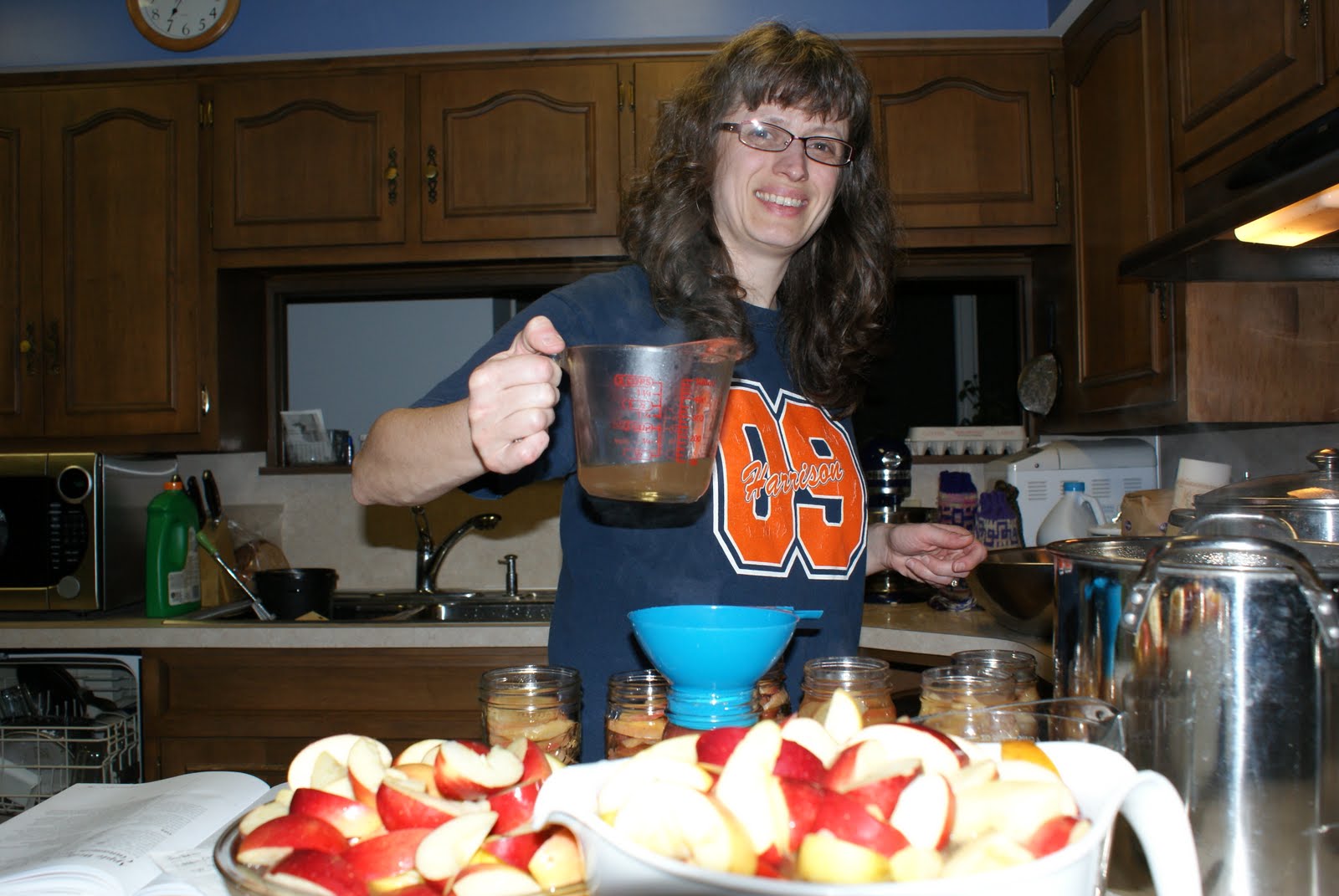
Today Beth and I picked about 9 bushels of apples in just two hours time, with 1 bushel being donated to the local Food Finders organization. These apple trees were on a local farm where the apples were going to go to waste and a friend invited us to pick. We are hoping to turn a good part of these into cider to freeze for use through the fall and winter months. there is nothing as good as homemade unadulterated cider.

The trees were absolutely loaded with apples, with a large variety of types. I sampled quite a few different apples. At one time in our nation's history apples and apple trees actually became despised by "upstanding citizens". The reason was that apples were grown and used primarily to make hard cider whiskey, also known as "applejack". The benevolent Johnny Appleseed we learned about in grade school was actually very fond of hard cider, and made it his mission to plant the old, gnarly apples, not for eating, but rather for the purpose of making hard cider known as applejack. During the 1600 - 1850 years it was the most popular alcoholic drink in America. Even children and Presidents drank it at breakfast and dinner.

What ultimately led to the demise in the popularity of hard cider consumption was the Temperance movement. Because the Temperance movement was religiously based, many of the church going farmers gave up their drinking of apple cider. Many of them even went so far as to chop down the apple trees on their farms.

When Prohibition finally became the law, this marked the death knell for hard cider. Today, very few people in our country have ever tasted hard cider. I remember in high school that my senior agricultural and business class tried to make a batch of hard cider. Each week we would taste test the "nectar of the gods". We forgot about it over a school vacation, and returned to find it had turned to vinegar.

although we are not planning on making hard cider, we hope to turn these bushels into sweet cider, cut apples for pies, and applesauce, along with keeping some in the basement for eating over the next few months.

An apple a day keeps the doctor away indeed. I wonder if the saying "a glass of applejack a day keeps the doctor away" was in vogue 150 years ago?

Monday, August 30, 2010

Lost in Time...and Found; John W. Thomas and Turesa Jones Thomas


This is my great grandmother. Her name was Blanche Olive McElfresh. We called her Mimmie; I thought that was her actual name for a long time when I was a little girl.

In 1919, long before I was around Mimmie married the "time study man." His name was Walter Jones Thomas. He wasn't Catholic, and he had been married before. But he was the one.

Blanche and Walter lived with Mimmie's parents in Anderson, Indiana. Everyone seemed to be working at the auto factory in one way or the other. In 1922 Blanche had a son named Wendell who would become my grandfather.

After that the family story becomes cloudy. No one is exactly clear about when Walter left. Some say it was right away. Others say it was years later. My uncle says he has a stack of letters that Walter sent home to Blanche and Wendell as he traveled around the country looking for work during the Depression. The 1930 Census lists my great grandfather as living in a boarding house in Toledo, Ohio. The 1940 Census won't be public until April, 2012 so we have a while left to speculate about what became of Walter after he left Anderson...until his death in Florida in 1960.

Because of Walter's departure from our family, we never knew where he came from or anything about our Thomas family origins. Starting with Blanche and Walter's marriage certificate, I began to unearth the clues that would lead me to discover my great-great grandparents. For years all I had was this picture.

I could see their faces. I knew that Walter had a mother, a father, and what appeared to be two sisters. But their names and where they were from remained a mystery.

Getting the marriage certificate opened the floodgates of knowledge. I learned the names of my great-great grandparents, John W. and Teresa or Turesa Jones Thomas as well as Walter's siblings, Verna (later Cottrell) and Veda (later Woodruff). AND I learned that Walter grew up only a couple of hours away from where I live! After some emails with a very helpful keeper of the Livingston County genealogy website I had reason to believe I might just find the grave site of Turesa Jones Thomas, my Great-great grandmother! And maybe even her mother Elizabeth Rachel too.

We set off on a country drive on a beautiful late summer day to Fairbury, Illinois. I love a drive in the country with Brent, so I was looking forward to the day even if our mission turned up empty I knew we would have a good time no matter what.

We found the Dominy Public Library easily and I realized that my ancestors also used this very library. Goosebumps! The librarian directed us towards reference books that listed everyone interred at the local Graceland Cemetery and told us that obituaries would be listed on the microfilms of the local newspaper. They were all labeled by year in a locked drawer, which she opened for us. I hadn't used a microfilm viewer since college and it took a while to acclimate ourselves to it. Soon we were zooming past funny ads for "formaldehyde on the farm" and other strange things, but once we had it figured out it took almost no time until we found the obituary for John William Thomas, my Great-great grandfather.

"John Thomas passed away on Sunday night February 10, at the home of his daughter, Mrs. B. L. Cottrell, in Peoria, of paralysis. ... Deceased was born in Swausea, So. Wales, January 23, 1846, and came to America with his parents when five years of age, locating in Ohio, and later lived in Danville, Ill., where he grew to manhood. ...Mr. Thomas was a man of sterling qualities, a peaceable citizen, and was greatly loved by all who knew him. He was a devoted husband and father. He was a Methodist by faith and before his health failed was a newspaper pressman for years." --Fairbury, Illinois, Friday February 15, 1918

I couldn't believe it was that easy! I was especially surprised because the census listed him as living in another town at the time of his death. But thankfully his funeral arrangements were in the hometown of his in-laws. I couldn't believe our luck. The cemetery book seemed to indicate that he was even buried in that town. That was more than I expected.

We went to the cemetery to find the grave, hoping that it would lead us to better information for finding obituaries in the microfilm later, but alas no better dates could be found. So plodding forward through the microfilm slowly was all I could do. This eventually led to the discovery of the obituary for Turesa Jones Thomas, my great-great grandmother...

"The deceased was a woman of kind personality, a devoted mother and the kindest of friends and neighbors. She was a member of the Presbyterian church and a regular attendant at its services and Sunday school." --February, 23, 1923

... and with 10 minutes to spare before the library closed, I found the obituary for Turesa's mother (my great-great-great grandmother!) Mrs. Theodore B. Jones, which revealed her maiden name, Elizabeth Rachel Popejoy. I couldn't believe it! I hastily printed the page as well as possible and reeled back the microfilm and replaced the cover so the librarians could go home, happy to have so much more information for future research, and knowing that just a little more time would have given me great-great-great grandfather Theodore Jones' obituary too.

We had a delicious lunch at a local restaurant called Lost in Time. That seemed like a fitting place to eat on a day of discovery of relatives who had been lost in time for so long.

Then we went back to the cemetery. We never did find a marker for Elizabeth and Theodore Jones, Turesa's parents, although they were listed in the book. We wondered if maybe there is no longer a marker? We put flowers on the grave of John and Turesa Thomas and took pictures so we can always remember and they will not be lost in time anymore.

Thursday, August 26, 2010

Sorg Journey


My Dad's mother's grandfather Ferdinand Sorg came to the US from Germany to avoid being conscripted into the Prussian military force that was consuming the region in his day. He settled for a while in Minnesota with other German immigrants but eventually moved south to Pocahontas, Arkansas where my grandma grew up. Here is a little bit of the story of their journey South...

"We moved to the Ozarks in the fall of 1894. People were typical hill people of that day and looked with suspicion on the 'durn furriners' that moved in from the north and especially so in our case, since we were German Catholics. There were five boys and one girl (myself) of us, two older sisters and one brother were married and did not come with us. The natives must have decided to make us leave. They would lay the rail fences down to let cattle into our crops or pull lower rails out and put rocks or chunks in to let their hogs in on the crops.

Mother raised turkeys and they would shoot them and they burned a field of clover that was giving hay and feed for our cows and of course abundant milk and butter. Mother churned 16 lbs. a week

One day a neighbor from over the hill came to see mother and told her his wife was in labor and asked her to help. She went at once and helped to bring the baby but it was either dead at birth or died right afterward. My father made a little casket for it and it was lined and covered with cloth.

From then on things began to change. The people became friendly and mother was called on quite often to deliver the newborn. She made no charge for her services and it was free to those she served and pay anything they were able. The people were all so poor, that the question of pay was not important. I have no idea how many mother cared for and she became known as Grandma Baur. ...

It was while they were living in the covered wagon near Carthage that Ferdinand and Anna Mary's first child was born March 28, 1889. he was a premature baby weighing about 3 pounds and they named him Herman Joseph. Ferdinand could spread his fingers and hold him on one hand. They laid him on a pillow and his grandmother Bauer wrapped hot bricks in blankets and placed them around him for warmth. And Indian woman came to the wagon, looked at him and told them not to worry; that he was a healthy baby and would live to be a fine man. How right she was! He lived for 82 years!"

And he was my Great Grandfather! (Pictured below, and standing above by that large unidentified crop.)

-An excerpt from the Sorg Family History Compiled by Erma White Sorg 1984

My dad's mother's parents; Joe Sorg and Anna Junkersfeld. Anna's Wedding Dress is made of curtains.

Saturday, August 14, 2010

When it's Hot it's Hot

Everyone has been complaining of just how hot and humid it has been the past month. And, I have to admit that I can't recall such a long string of severly hot temperature indexes (105-110) here in West Lafayette. But, it was not sooo bad that I didn't want to go out and pick some tomatoes, peppers, cilantro, basil, onion, and garlic and make some hot salsa!

I have been making a large batch of this salsa about every three or four days, and then subsisting on it with chips, fajita's, nachos, whatever...now that we are out of ripe tomatoes for now, we got several from my parents garden to make another batch!


Here is the recipe from probably my favorite cookbook "Simply in Season: A World Community Cookbook" by the same group that published the More-with-Less cookbook. Nearly every recipe we have tried from this little green book tastes awesome.


Fresh Summer Salsa Recipe


6 medium fresh tomatoes diced

1 medium red onion diced

1 large green pepper diced

2-3 hot chili peppers diced (vary based on how hot you want it)

1/4 bunch of cilantro chopped

2-4 cloves garlic minced (2 adds good garlic flavor, 4 if you love the taste of garlic long after)

3 tablespoons fresh basil

2 tablespoons vinegar

1 tablespoon lemon juice

1/2 teaspoon salt


Combine in bowl and let stand 30 minutes, then serve.


Thursday, July 29, 2010

Nifty Nettles

I first learned what nettles were in Girl Scouts on a hike. I had walked through them and my legs started to itch. That's why they're called "stinging" nettles. I didn't think much more about the plant until years later when I became interested in nutrition and herbs. I found out that nettles are full of chlorophyll, vitamin C and vitamin A, minerals, including calcium, silicon, and potassium chloride; protein, and dietary fiber. Nettles have been used as a nutritional tonic for many things including anemia and as a dietary source of calcium. They grow in my yard and I have used them on and off over the last several years. I find that I feel more energetic when nettles tea or infusion is part of my daily routine. Nettles rinse is also very nourishing for the hair!

So imagine my surprise when I found that this trusty plant had also been incorporated into a new yarn! Classic Elite Woodland is 65% wool and 35% nettles. The animal fiber and the plant fiber take on the dye differently giving the yarn a rich heathery look that is very appealing! And the combination of both wool and plant fiber together gives the yarn a quality that neither has alone. I very much enjoyed knitting with this yarn and think you would enjoy knitting anything out of this new collection.

Wednesday, July 21, 2010

Pickles Pickles

I planted three hills of bush cucumbers this spring. Even with all the shade from the surrounding trees, cuks seem to do very well here. I was noticing the profusion of yellow flowers on the vines one day in early summer, with just some very very tiny baby cuks starting to grow. We had five days of rain in a row. I decided to check under the leaves and cuks were everywhere...large and small. We've been eating cucumber, tomato, and basil salads, and sweet refrigerator pickles.

Our son Wes requested some *real* dill pickles, so we cut up seven cuks into a gallon jar and added one hot pepper and some dill and garlic from the garden, plus some fancy spices we had in the cupboard. They sit on the counter for 2-3 days to ferment, then into the refrigerator until they are gone. Yum!

Friday, June 18, 2010

Nissen Fundoplication - one year later

This is not really a post about homesteading, food, or nature...but it is about health. Exactly one year ago today I was in surgery for a complication that had nearly ruined my overall health. I thought I would post the details here in case someone else might be searching for information and experiences that others have had with the Nissen Fundoplication surgery that physically corrects major hiatal hernias. Mine has been a very positive experience overall. Much of what I found on the internet in my early search for solutions was very negative regarding the surgical procedure. Thus, I'm going to offer a detailed look in this post of my own experience hoping it may help someone out there with a serious GERD issue.


Back in the late 1990's I began having a lot of trouble with bronchitis conditions that frequently recurred. Doctors and clinics I would visit would always ask me if I was a smoker - I never have smoked. Often my energy level was very low and sometimes I felt like I was dying. I was finally diagnosed with GERD or Reflux disease - but encouraged to try medicine and other lifestyle adjustments. Let me say when the problem started I was not overweight. I was probably 10 pounds or so overweight midway through the disease...and certainly for folks that are overweight losing the weight may indeed help you or even could correct your problem. Well, since the weight was not the major issue for me I underwent just about every test, diet, special pillows, bed-raising, and medicine I could find of over the past ten years. Nothing really worked...until I started taking Prilosec.


I needed heavy doses of Prilosec, however, and in the beginning it helped. Gradually however after three years the doses were not helping as much, and I was starting to have increasing nerve and bone pain throughout my arms, hands, and toes. It became very painful and my intuition told me it was a result of the Prilosec. About that time studies were being published in medical journals demonstrating these same type of side effects. My dental health had deteriorated greatly and I had many dental problems all of a sudden. I was seldom able to sleep very much during the night, often waking not able to breath with horrible burning in my chest and throat. I was trying several alternative health therapy approaches - but unfortunately these were of no help.


Finally, I threw in the towel and started to consult with surgeons on what might be done. After several nasty exploratory tests the diagnosis was that I had a hiatal hernia at the stomach opening allowing highly acidic juices to flow upward burning the lining of my esophagus constantly. Nothing short of surgery would correct it. The doctors said it was likely I would end up with cancer if nothing was done. They recommended the laproscopic nissen fundoplication procedure that would physically correct the hernia and restructure the stomach opening such that it would operate as close to normal as possible. during the initial consultations I had misread the doctor in thinking he had said I would not be able to eat meat or bread forever after the surgery. Well, that gave me great pause, but I felt this condition would kill me so was willing to do it. But, later I learned he meant no bread or red meat for the first six - eight weeks. That was a relief!


I had to have a preliminary surgery test that was called a pressure test. This to me was more difficult than the surgery itself, but was necessary for the surgeon to plan the exact level of correction. The surgery required five small incisions in my belly. I spent one night in the hospital and was ready to leave at noon the next day. Elizabeth helped me through it all and slept the night on two chairs pushed together and read to me. I couldn't have gotten through it without her. Thank you, Honey.


My diet was liquid for several days, and then proceeded to introduce very mild foods. It took about three weeks before I began to eat "normal" food, and two months before I was going along pretty normally again. I had to learn to chew food very well and also not to drink too fast. The new stomach opening could only handle so much at a time. And if I went to fast the pain was there to slow me down. I ended up losing about 15 pounds, but in the year since I've gained back some of that weight.

One other side effect post-surgery is that people normally cannot burp or vomit. However, my surgeon was incredibly knowledgeable and adept with this type of surgery. He even had it performed on himself. Turns out he restructured the opening just right...maybe just a bit loose. So, I seem to be able to burp fine....which I can tell you it is very painful not to be able to do so. and this occured early on after the surgery. BeanO and Gas-X were my friends.

A year after the surgery, I only have a very slight indigestion feeling and this occurs only once or twice a week, and only a few minutes at a time. Over time I realize that the restructured opening could become loose and the need for GERD medication to control reflux...or worse having the surgery again...might be needed. However, for many patients the surgery seems to work for many years. My quality of life has improved immensly. I gained my energy back and became like a new person. I'm very thankful I met the surgeon and was able to have him perform this correction for me. I am also very thankful for my loving wife who saw me through thick and thin during this entire ordeal.

Hey, if you have a major reflux problem check out the procedure and make sure you get a surgeon with a lot of experience. It can change your life for the better. I can eat chocolate, drink beer, and even stand on my head without any problems now!

Sunday, April 25, 2010

'Shrooms now and later

One of my favorite foods is mushrooms...I'm not sure I've tried a mushroom I have not liked. Since I was a small child I recall going on annual mushroom hunts with parents and relatives. The past few years, I've either not had as much time to go looking, or the neighbors have already cleaned out the woods of the coveted morels. So, after doing some research, I decided to try growing mushrooms from some of the logs I had recently cut in our woods.


The basic idea is to use 4-8 inch diameter hardwood limbs that were felled in late winter or early spring. The procedure involves drilling 1 inch holes in a diamond pattern across the entire surface of the log, and then pushing mushroom spawn growing in sawdust into the holes. It's best to brush some melted wax over the inoculated sawdust sites to prevent them from drying out. Then, over the course of 6-12 months you manage the moisture level of the logs by keeping them shaded...and mushrooms will begin to appear. I am trying out shitake and oyster shell mushrooms on basswood and elm logs. Our youngest daughter Rhianna even helped inoculate one of the logs.


The fun really began when I was outside working with the logs and sawdust, when I heard our neighbor, Tyler, start exclaiming he was finding mushrooms with outbursts like "Holy Mother bleep" and "Oh My God". This was just below our house in our woods. Wes and I ran down the hill and joined him. Huge yellow sponge morels were everywhere. The three of us must have picked 10 pounds in less than 10 minutes. The timing was interesting, and gave me hope of not only having mushrooms now, but also later in the year. Then the rainstorm that was threatening all day finally let loose.


Last evening we dined on a dish of pasta with morels and asparagus sauteed in butter and garlic, with Parmesan cheese sprinkled on top, with Rhubarb crisp for desert. My parents are coming over today for a mess of traditional fried morels. Yum!

Wednesday, April 14, 2010

100 things we've done

The other day Beth and I decided to just list off the top of our heads things we've done that are homestead related...and we ended up with 100...I think there are more...but just for fun:

Things we’ve done ourselves (together or separately):

Gave birth to 3 children at home
Raised our own pigs
Butchered a pig
Butchered chickens
Raised egg laying chickens
Built a coop
Built a screen room
Made bread from scratch
Preserved all kinds of foods including pickles, dilly beans, apples tomatoes and jams
Grow gardens
Knitted socks, sweaters and more
Restored a prairie
Installed flooring
Installed a home theater
Installed slate flooring
Painted our own house
Installed a wood burning furnace
Felled and split firewood
Killed rabid raccoons and an interloping rat
Remodeled a basement
Built fences
Change our own oil
Repaired radiator hoses
Replaced alternators and spark plugs
Fixed flat tires
Removed stitches
Made herbal medicines
Dyed with Henna
Made a self-watering container
Made a raised bed
Herded pigs
Loaded pigs
Made apple cider
Do our own taxes
Did my own divorce
Started my own business
Fixed our own computers
Did electrical wiring
Made pottery
Recorded our own cd
Made an instructional video
Repaired brake and light hookups for trailer while on the road
Repaired weight distribution bracket for camper while in Missouri
Wrote poetry
Delivered babies
Made doughnuts from scratch
Created websites
Taught guitar classes
Taught outdoor skills classes
Taught childbirth classes
Spun yarn
Fixed bicycles
Got out of debt
Fixed lawnmowers (too many times)
Patched the driveway
Sprouted vegetables and herbs to plant in garden
Made dandelion wine
Planned conferences
Cooked a lot of meals from scratch
Recycle most of our waste
Built a composting toilet
Repaired toilets
Repaired drywall
Navigated with real maps not GPS
Installed egress window in basement
Installed programmable thermostat
Transported & raised bees
Extracted and bottled honey
Made bath salts
Foraged for wild foods
Built a trail through the woods
Hunted for mushrooms
Rescued an unhatched chick
Nursed injured animals to health
Groomed our dog
Biked to work
Trimmed hair
Disinfected our well
Tested well water
Watered animals from creek
Mastered pie crust
Created a recipe
Remineralized a tooth
Constructed a masonry floor with antique bricks
Cleaned our chimney
Repaired shower tile
Installed ceiling fans
Installed larger oven and resized wall opening
Put in whole house water filter
Installed & configured computer & phone network
Reclaimed outdoor furniture
Made yogurt
Sprouted seeds to eat
Did newborn exams and screening
Did community presentations on healthy homes and water quality
Coached softball
Built a birthing replica for demonstration
Did our own business accounting
Canoed the Wabash & Blue River and Big Pine Creek
Made homemade ice cream

Friday, March 26, 2010

Dyeing with Plants

I bet you think this is going to be about fiber. You know, knitting, spinning, dyeing and all that jazz? Well it's not going to be about that. It's going to be about....HAIR!

Yep, that's right. Hair.

Maybe this doesn't seem like something you'd read about on a blog about homesteading, but I find that I am interested in anything that allows me to be more independent. In fact we were thinking of making a list of "do-it-yourself" things we have actually done ourselves, but I'll leave that for another day. For now I want to tell you about my natural dyeing experience.

If you haven't noticed, hair coloring is really hot right now. I think maybe more than ever before. A long time ago, I used to think that hair coloring was something fake that people used to make up for not being happy with themselves. Not blond enough. Not young enough. You get the idea. I rather prided myself on the idea that I didn't need to do that kind of stuff; I would just be happy with myself the way I happened to be.

Then I had kids. And they opened my eyes up to the fact that today changing your hair color is like deciding what color of fingernail polish to wear was when I was their age. My older daughter went from bleach blond, to BLACK, to her current black/red combo and she's really hoping for fire engine red this summer. She has helped me see that changing your hair color doesn't have to mean you are unhappy with the natural you; but that it's ok to have fun & experiment and try new things-- and that can be liberating. In her world your hair color can be as changeable as which concert t-shirt she chooses to wear--Kelly Clarkson one day; Iron Maiden the next. No boxes or boundaries!

Both of my daughters have been trying to get me to color my hair for quite some time. But really, even though I thought it sounded fun (and a little bit daring!) I just couldn't see me really buying a box of L'Oreal and doing that. It just wasn't me.

One day I happened across the Henna for Hair website. And I couldn't quit browsing and looking at all of those thumbnails of vibrant glowing hair color. I looked at "before & after" pictures; I looked at the individual mixes of herbs and everyday household items that people used to color their own hair. This was starting to speak my language. Like making herbal infusions for physical health, this was another kind of herbal infusion for hair health! I was hooked.

After lots of reading & thinking about which colors I liked, I ordered some henna and indigo. Being a very brave person, I tried them out on my daughters! Dare I say this was about a YEAR ago? After having fun with my daughters' hair, I left the henna & indigo packets in a closet in a back room almost forgotten. Fun as it had been I was still clinging to my purist, natural ideas--plus I was kind of afraid of doing something I wouldn't like. I like my hair. I know my husband likes my hair. I didn't want to mess it up. And when it comes to change, well I'm a pretty slow mover.

I'm not sure why I finally found my henna mojo. But a couple of weekends ago I got the urge to try it. I pored over the Henna for Hair website again reminding myself how to do it. Doing a henna treatment takes time and pre-planning. Unlike a commercial hair dye, henna needs to be mixed up the night before with several hours to let the dye release. Then you need time the next day to apply the henna, something I couldn't have done by myself. Then you need a few hours to let it sit on your hair. Then you need a rather major shampooing treatment to get it off. So with time ahead of me and a bit of courage, I mixed my henna with lemon juice and let it sit in a warm place over night.

In the morning I mixed in indigo to tone the red down a bit and make it darker. After a few minutes of trying to apply it myself I called on Colleen for help. She applied the henna paste layer by layer to my hair. To be positive, the mixture looked a lot like mud; to be more realistic it looked quite a lot like baby poop. The more my hair was coated the heavier my head became. After my head felt about 5 pounds heavier, we piled my henna coated hair on my head & wrapped it in plastic wrap and a towel. Then I just had to wait. And wonder. I didn't take any pictures of this process...I was still pretty chicken about the whole thing. I wasn't sure I'd want to document it publicly or otherwise.

A few hours later when I couldn't stand it anymore, I decided to take the plunge, literally, and got in the shower. I can't really describe what happened when the spraying water hit my head. I was suddenly immersed in a mud bath like I've never experienced before. It was really like being in a mud waterfall. Muddy looking water was running all over me, the shower, and everything. I was not prepared for that! It was quite a shock at first. But after a few shampoos and lots of conditioning, the water was running clear and I was ready to see how it worked!

I could only see my water darkened hair that really didn't look very different than it usually looks. But when I looked in the mirror I could see a glow around my face that was new and different. When my hair dried I could see that the grayest hairs, especially around my face and bangs, were a fairly bright copper. And the hair that was already brown was now a more glowing auburn. Plant dyes are different than commercial hair dyes in that they soak into the hair and actually dye it, instead of just coating and covering it. So with plant dyes, the hair retains it's natural pattern of highlights and shading nuances; they are just a different color, but the natural variation is still there. I really loved how my gray strands became coppery highlights! And my hair felt conditioned & soft and well ... just healthy!

Many people who have a history of using commercial hair colors say it is hard on their hair and leaves it feeling brittle and dry. But the natural henna and indigo are actually conditioning and contribute to hair health. Since I've never done the commercial dye I can't speak to that, but I can say that my hair has felt full and healthy since doing my henna treatment. I feel great about being able to care for my hair in a natural way. And I love being able to use natural plants and to take care of my hair myself. I do a lot of things that I like feeling ownership of, like making nettle infusions for their nourishing qualities or baking fresh bread for my family. It just feels good to know I can use things that nature provides to take care of my needs. And it feels good to know I can do it myself. Now I have found another one to add to the list! Henna!

Friday, March 12, 2010

Wood, wood, wood, how much wood could a....

Lately I've been doing a lot with wood. Cutting trees, chopping wood, stacking wood, burning wood. If you have followed previous posts, you know that we installed an EPA rated wood burning furnace last autumn. It has been great! Our home feels warmer, and I estimate that we have saved about $1300 on the propane that we did not need to use this winter. After including the federal tax break, I believe this furnace will pay for itself in two winters of use. With the exception of one pickup truck load of wood that we recently purchased (and Elizabeth got to help with), all of the wood we've burned we have personally harvested locally from dead trees.

The past month, I've been cutting a few trees that are starting to die, or are increasingly blocking sunlight into our small clearing where our gardens are located. The cool thing is that we will be using the larger sections to split and burn in future winters. The smaller diameter limbs will be serving to produce a variety of mushrooms - something I've been talking about trying for several years. Cutting, splitting, hauling, and stacking wood is something I've done since I was a little kid - and now my kids can get a little of that "split-rail value" experience...they are not amused. There is just something great about the smell of newly split wood, the differences between species, the good feeling of the ache in your muscles knowing you are able to heat your home without the gas man next year.

I'll be posting in the future about the mushroom production....but next up we will be building some new garden beds with cold frames, and getting ready for honey bees. We are also trying our hand at sprouting our own veges....starting with sweet and hot pepper plants. Oh, and we just doubled our chicken flock with five new hens. Lots of exciting projects and photos coming up!

Friday, January 1, 2010

Really Old Green Technology - Hot Water Bottles

If your sheets or feet feel cold on a winter's night, we highly recommend the use of a hot water bottle, sometimes called a hottie in the UK. This small rubber water bottle contains about 1-2 quarts of hot water heated on the stove, and we covered it with a flannel cover (cost about $10 for the bottle and a few more $ for a cover). This will give you instant warm sheets by your toes! Just tuck it in a few minutes before bed. It radiates the heat all night. Before we installed our wood burning furnace, we allowed the winter temperatures in our home to drop down to 60 F during sleeping hours. We used a hot water bottle nearly every evening. It allows us to save energy, yet remain comfortable all night. Our programmable thermostat kicks on the heat around 5:30am and gets the house warmed up again before we get out of bed. This is truly green technology that works, and the rubber bottle will last at least several generations. It isn't new, but it is a time tested way of staying warm all night while your furnace remains off.

Go one more step and cover your bed with a feather-down comforter. For cool spring or late fall such a comforter alone will keep you toasty. Add the hot water bottle once winter kicks in. You can't beat this combination (unless you factor in skin-skin contact). You'll save money and fossil fuels all winter and your feet will thank you.

Tuesday, December 1, 2009

Nectar of the Gods

We had the good fortune of trading some of our pork for beef that friends of ours, Linda and Rick, had recently purchased from an area organic farm. We offered to trade more pork for some of the apple cider they made, when they said there were plenty more apples to pick! So, with our three children, and a few friends of Linda we all went and picked more apples two Sunday's ago. I do not ever recall being able to pick apples this late in Indiana. The trees we picked from were dwarf apple trees that were easy to reach. Some of the trees were absolutely loaded with amazing fruit. The abundance and goodness was almost mind altering, as I ran from variety to variety tasting the fruit. In less than one hour our family alone had picked more than 200 pounds of apples. I felt like this was a little bit of Eden that I was experiencing.


We proceeded on to Rick and Linda's homeplace to process the apples into cider. Making cider was a first for Beth and me. The elegantly built and conceived cider press worked efficiently with only our muscle power...and it was easy to use....as long as I remembered to close off the netting in the bucket and switch out drain pans on time. With a tasting glass, we sampled the various mixes of apples being squeezed into what I like to call the Nectar of the Gods. There is nothing quite like the delectable taste of fresh apple cider. Some batches were very light colored and smooth, and other batches were dark and hearty. We seemed to acheive about 10-11 gallons of cider with one hundred pounds or so of apples. We kept back the rest to process and freeze for apple pies and apple sauce, and a few for just eating through the winter as long as they last...an apple a day does the body good.


Friday, November 20, 2009

Heating Our Home with Wood

This past summer we had our roof re-shingled due to the massive hail storm damage (see blog post from June). While the shingles were off and several plywood sections needed to be replaced, we had the contractors (my cousin's business Triple L contruction) insulate the attic. We brought the insulation level from R19 to over R40. This made a big difference in the energy needs of our house! It has felt cooler in the summer, and retains heat better thus far in the winter. Our windows are another story...single pane from 1969. Beautiful to look out of over the wooded landscape, but terrible in terms of energy efficiency.

In addition to the extra insulation, we also started to seriously consider using wood to help heat our home. Propane prices have increased greatly, along with all other fossil fuel prices. I don't think we'll ever see fossil fuel prices go back down. They are certain to increase greatly over time. The total price we pay now for LP each heating season has tripled in the 8 years we've been in the house! This, despite keeping nighttime temps quite low, and daytime temps low when we are not in the home during winter week days. We had installed a programmable thermostat which made things very convenient. However, we do live in a woods and do have some access to dead trees we could consider for heating our home.


Our ancient fireplace insert is quite small and not very efficient. It adds some ambiance and does help warm part of the living room area. After researching outdoor wood furnaces that can heat the home and the water we would use, we decided the $10,000 + investment was not the best choice at this time. We found an indoor wood burning furnace that will integrate with our current gas furnace for the best of all worlds. It is also EPA approved for efficiency (up 76%) and low emissions. We spent a lot of time working on the installation...and it still is not completely electrically installed. Beth has had visions of me as the father on The Christmas Story, going to the basement to kick, scream, and cuss out the furnace on a daily basis. The directions are very vague, and looks like we'll need to hire an expert to get it compeltely hooked up and running properly. It's really, really hard for me to admit defeat. But, I think we need to call in an expert before I get socked to death.
This has not deterred me from USING the wood furnace. Other than one day where the gas furnace malfunctioned and continously heated the house to about 85 degrees, we have not used any lp gas this season. The wood furnace does take more oversight, but I've been really impressed by how much heat and how long it will burn a load of wood.


The other aspect of this is that I need to get out there and cut, haul, and split wood a LOT more. this is a lot of time and muscle required, but also is good honest work (and might help keep me in shape). It feels good to know I can gather the necessary resource for heating our home locally. The trees are a renewable source of energy, as long as we harvest respectfully and utlize this sustainable source responsibly. On the economic side, I've estimated we'll save over $1,000 dollars a heating season (typically Nov - April) with the wood furnace. This is a big savings, and will basically pay for the indoor wood furnace in three years! Beyond three years, the savings will accrue.


I know not everyone can heat with wood, but it is an option that may end up being one of the better ways we can locally source our energy for heat. One of the best things we can do in current times is to re-forest the landscape. Trees do an incredible number of functions to made ecosystems healthier and more stable, and provide many useable products in the future. It used to be that a nation's wealth was accounted for based on the health and spread of its forests. With the vast increase in wood burning technology and efficiency, and if you have access to a wood lot, and research what you are doing, it can be economically and environmentally sound.

Friday, November 6, 2009

Our Pork Chops vs. Their Pork Chops Part II

So, What gives? How can Payless sell pork chops for half the price that it takes me to raise mine from scratch? It has a lot to do with the cheap food policy promoted by the federal government and agribusiness corporations, cheap but wildly potent fossil fuels, and the dietary choices we each make.

Industrial U.S. agriculture produces the pork chops you can purchase at most grocery stores such as Payless. And, it produces those pork chops on a wide scale based on intensive use of non-renewable resources such as fossil fuel, minerals, and metals coupled with huge government payment programs to industrial agriculture. $11.3 Billion for commodity subsidies in 2006 alone. (An agricultural commodity, such as pork, is usually a food product produced on a large market scale.) This figure does not include "disaster relief payments or conservation ag payments...both of which would be unnecessary in a sustainable food production system. Some estimates show that the average U.S. taxpayer pays out around $300 annually toward agricultural subsidies to Uncle Sam...which then is distributed to the agribusiness giants. This amounts to $600 for most families per year.

Humans have been practicing agriculture for at least 10,000 years, but it is only in the last 60 or so years that heavy industrialization has occurred. So much so, that farmers are extremely dependent on synthetic chemical fertilizers, pesticides, and fossil-fuel powered machinery. As a result yields have greatly increased during this period of time, along with an increasing population of mouths to feed. Yet, the overall efficiency of production has sharply decreased when considering the amount of energy used in the industrial system. Scientists estimate that the industrial food producing system uses from 3 to 10 times as much energy as it produces. This means for every kilocalorie of food energy produced 3 to 10 kilocalories of energy were necessary to produce it and get it to the stores, where we drive to purchase it. (The ratio is much worse 35:1 for beef produced in feedlots compared with grains) How long can we keep this up?

What does this have to do with the price of pork chops in Payless? In order to keep the price of those pork chops low, in spite of the very unsustainable use of energy and non-renewable resources, our government pays out big bucks to keep this industrial system propped up and functioning. Who pays for it? You do. I do. We all do. And our children will pay dearly if we don't get it turned around soon. Although the pork chops at Payless were going for 97 cents a pound...you don't see the hidden costs behind those pork chops on the sticker price. If you account for all of the hidden costs they should cost us at least $6-8 a pound.

We very much need a level playing field when it comes to food production politics. If we had such an environment, I bet we would see a rapid move to sustainable food production. A system where we retain freedom of choice and quantity of foods we eat, but we pay the appropriate price for the food with the heretofore hidden costs included in the sticker price. My guess is that we would likely eat fewer pork chops and meat overall, but that when we do purchase foods they would be coming from local growers using sustainable practices. This would have the desired effect of creating more niches for local jobs, our dollars spent would circulate within the local economy strengthening our communities, providing healthier food and healthier people.

Somehow we the people must get our elected officials to support real change in food production policies. But, in the meantime, we can choose whenever possible to eat food produced locally...even though it means we pay out of pocket twice....once for the food and once for commodity subsidies of the food we are not eating. There should be no "cheap food policy" because there really is no free lunch.

Oh, "our" pork chops are pretty darn tasty! But I'm hoping to find a way to feed a pig or two more sustainably in the future such that the ratio of energy in to energy produced is even more favorable.


Saturday, October 31, 2009

Our Pork Chops vs. Their Pork Chops Part I

Our two pigs remained in their woodland pigpen until I opened their gate last Monday evening. They both walked right out, up a small ramp and onto an open air trailer without so much as a nudge from me. However, in preparing for loading the pigs I had jumped across the fence into their pen to retrieve a feed pan. I simply ran and sailed right over the fence into the mud. I grabbed the feed pan and made the same leap back over the fence, but my boots were sucked back somewhat by the mud. Once airborn I noticed that the ground was much lower on the pigs' side of the fence. I realized that I was not going to clear the fence. As gravity pulled my 180 some pounds down my boots caught the fencef violently, my pant leg ripped open on the metal fence post, jabbing into my leg. I hit the muddy ground and many protruding tree roots with my ribs looking every bit like a world wrestling federation champ free-falling onto a hapless victim. Once I verifed that nothing was broken my only thought was "Dang! I sure am glad I'm hidden from view back here in the woods and no one saw me do that silly-assed dive over the fence." What I didn't know was that my dear wife was peering down at me from the screen room on our house at just that moment...apparently quite impressed with my pig loading skills. Later she said, "I had never seen anyone jump straight up in the air like that. I thought it must be some pig whispering leap to get them to go out the gate and onto the trailer."


All things considered, I was quite happy that the pigs were safely on the trailer. The day before we had just finished eating our first ever homemade donuts. If you've never tasted homemade donuts you are really missing out (picture below). I saved two glazed donuts and apple peelings to serve to the pigs as dessert after their final meal. Hams and Bacon had led quite good lives at our homestead, but I wanted to give them thanks for giving their lives so that we can eat this next year.


Tuesday morning Beth and I rose from bed extra early and drove the pigs to the local butcher in Lafayette. It was still dark out when they walked into the abbatoir and across the scales. One bystander's mouth dropped open when he saw how large the pigs were...he bet me that the one was a 300 pounder! The man weighing the pigs gave us the weigh slips. Hams weighed in at 275. Bacon weighed in at 245 (an average weight for a market pig is 230lbs...so the 275 pounder is a heavy weight). They had started out life on our homestead at a mere 25 lbs each (see picture above) The total amount of actual pork, minus all of the inedibles, was a grand total of 370.8 pounds! That, my friends, is a lot of pork. We brought home the fresh pork cuts today. The hams, bacon slices, and other cuts that will be cured will take another week.


Although we have not fixed pork chops yet, we will soon. First on the menu will be a stir fry using small bites of pork steak along with greens, onions, and cabbage from our CSA basket. However, it was time to calculate just how much our pork chops cost us in dollars and cents. Here is how it came out:


Pigs $40 each = $80
Straw = $7.50
Nipple waterer = $5.00
Feed (1,300lbs) = $234.67
gas/hauling = $20
Butcher/processing = $326.91


Our pork chops cost us $1.82 per pound.


I cannot yet vouch for any taste differences between our pork chops and those that you can get at the local supermarket, but we have a hunch that our pork chops will compare with the natural raised pork chops from the farmers market. So when we compare our cost of $1.82 a pound with the $4.75 per pound price at the farmer's market, we do pretty well. But, pork chops can be had in our town for less, I found out. Much less! Payless has a "loss leader" on pork chops this week selling at a mere 97 cents a pound. These were their "mixed" chops...of mediocre quality. I know because I've had them before. Their better chops are selling at $1.69 a pound. Still less than ours cost us to raise, despite the fact that we had to provide daily care for our pigs, haul feed and water for five months, pay the butcher, while taking ownership for growing our own food. Now, Marsh supermarket, just down the road from Payless, is selling their good quality pork chops for $3.99 a pound which makes me feel better. More than double ours. Which makes me scratch my head a bit, too.


What gives? how can Payless sell pork chops for half the price that it takes me to raise mine from scratch? And, how can the good folks at the farmer's market command more than four times the amount that Payless gets for theirs?


It has a lot to do with the cheap food policy promoted by the federal government and agribusiness corporations, cheap but wildly potent fossil fuels, and the dietary choices we each make. At this juncture, I'm going to taste our pork before extolling any further on these issues. Be back soon!

Friday, October 23, 2009

Pigs Escape! or How I got my Pig Mojo Back

This past spring we decided to add to our managerie of useful animals that help feed us by bringing home two piglets to our forest garden homestead. The idea was to raise our own pigs for pork. We would give them a good life in a modest pen in the forest, next to our chickens. They've been eating scraps from our table and excess garden produce, but mostly standard corn and soybean mixture feed. I happened to be home in the afternoon and not at the office when I received a call from our son, "hey, [the neighbor boy] just called me and said he got off the school bus and he was greeted at his house by pigs in his yard." I thought this must be some kind of joke, because I had checked on OUR pigs just two hours previously and they were lounging in their pen without a care in the world. This certainly had to be someone else's pigs. Yeah, right! No one in several miles of our house has a pig. Isn't it strange how our brains go into denial when faced with known, but terrible facts.

I tried to keep my cool as I walked (in a marathon walking sort of way) down the hill from our house to the pig pen. No pigs. I carefully inspected the pen, as if I really expected the pigs to simply sprout back up out of the ground and reappear. The fence in one corner was mangled badly with deep rooted out areas beneath it. It seemed such a small opening for such large animals to fit through. Unbelievable! How did this happen! I began to feel a slight panic feeling. A strange horror film flitted through my mind's eye. The frames of the film blurred by...our almost fully grown pigs running pel-mel, but unknowingly, toward brutal death trying to cross the highway in front of our subdivision to reach the corn field on the other side. The film slowed down and I see my pigs colliding with a BMW. I zoom in. I see the BMW is driven by a vegan suit and tie wearing CEO who's brother happens to be the chair of the local zoning board. The film's trailer ends with "Man jailed for pig neglect, disturbing the peace, and maintaining a common nuisance of the farmyard variety". The short film fades with an interview clip of our most skeptical neighbor..."the chickens we eventually tolerated, but this! they should throw away the keys." Now fully in panic mode, I phoned my wife pleading for assistance if she wouldn't mind closing her shop to come and herd pigs. What better way to spend the lovely afternoon.


Now sweating and in full panic mode, I ran down to the neighbor's house where sure enough our pigs were casually inspecting a whole new world known as the neighbor's front yard (see photo above taken by neighbor boy). One problem is that this yard was a quarter of a mile from our house. I ran back home, jumped in the truck, hooked up a small trailer I had just bargain purchased a few weeks before and headed back down the road. "How will I get these pigs back" was all I could wonder. Two neighbor boys were gracious enough to help me try to herd these porcine escapees into the trailer. No way were they going near the trailer. At this juncture, let's put this into context. We live in a subdivision. A unique, old, very forested subdivision, but still a subdivision none-the-less. I have neighbors who do not appreciate our chickens...and the clock was reading about 4pm...pretty soon people would be arriving back home from work. It was hard not to feel panic at the prospect of these dignified professionals arriving home at the site of pigs running amok in their neighborhood. I thought, "what in holy hell am I going to do?"


Then the neighbor boys, who were meanwhile pulling out their phone cameras and snapping shots to text and send to friends, family, and the police, started herding the pigs down the road back to our place. I stared with some astonishment, and little by little we got the two pigs in a narrow strip of land, heavy with briers and poison ivy, that lay between the creek and the road. We gently urged them on, me whistling and cooing as they curiously rooted and sampled every species of plant as they went. Then at the half-way point back down the road to our house I got my pig mojo back (side story: I raised various breeds of pigs on my parents small farm from age 11 through age 18, winning many awards, including best showman....which involves a very high level of professional knack with steering a pig exactly where you want it to go with the grace normally given to the dance floor - you might think wow, when would that skill ever come in handy, but...) Here I was herding two escaped nearly fully grown porcines down a subdivision road. Carefully navigating the flight distance between me and the two pigs, at an angle which would slowly move them in the right trajectory back toward their pen, we were only 30 feet from the gate. Elizabeth arrived in the Rav...deftly swinging the car at an angle to the road to block any hasty retreat of these swine...for a split second the Toyota Rav was a black suburban with tinted windows. My wife an FBI agent dressed undercover in black leather, sliding the vehicle 180 degrees blocking any escape. A sting operation, making sure these pigs would serve out their days where they belonged...in the pen! Meanwhile back at the ranch, the neighbor boy opened the gate, stepped aside, and sweet jesus both pigs languidly found their way back in to their lovely mud and straw covered pen.


They seemed relieved. I was overjoyed, but in shock. Pig mojo back. Ham and bacon preserved for future meals. Perhaps at least a couple neighbors none the aware. My wife said, "You are a pig whisperer," but wondered if the expense of the feed and the trouble to keep these pigs was worth it. I'll let you know in two weeks when we have pork chops covered with baked apples.

Wednesday, August 19, 2009

The Harvest

As summer tilts toward autumn, our small gardens have done well, with little work on our part, providing us with respectable harvests of beets, cucumbers, tomatoes, green beans, peppers, squash, carrots, and several meals of sweet corn and broccoli. We will soon harvest potatoes from the "tator tires".


We have really enjoyed simply walking up to the garden and gathering what is there. I thank the soil, the rain, the sun that energizes it all. We put a fairly hasty (due to my looming surgery), but somewhat planned effort, into two small gardens this spring. One at the Purdue Village Gardens and the other at our home of one small raised bed, a small patch of experimental sweet corn, several tator tires and hills, and two summer squash plants.


The sweet corn was a trial and error plot at our home site. The plot only receives about 6 or so hours of sunlight a day. Not really enough to have healthy corn production. But, we did get a number of decent and delectable ears. Our garden at Purdue also grew sweet corn, slightly better than at our forest garden, but not much better. Corn needs a lot of nutrients to produce well. But the buttery, sugary taste of sweet corn is worth the wait and the effort. Fresh picked is the best there is!


After good soil and proper water amounts, the keys are plant spacing and mulching...with early weeding as needed. After the first several weeks of work, we've really not spent much time at all on maintenance. Most of it has been in harvesting, cooking, preserving, and enjoying! This photo shows my bias toward "natural gardening"...but I've actually gone to a more balanced approach with less chaotic wild growth of native plants and more space for sun and garden plants. Hey, it only took me 8 years to lighten up a bit.


Tomato-Cucumber Salad. Add dill, vinegar, salt. Simply Cooling and Tasty.


Canning beans and dilly beans! A taste of the summer will be hidden away for a winter's day.


Earthy Beets....and the pigs loved the tops...Brent did too. We pickled these.


And what to do with the squash after too many stir fry dishes and zucchini bread? Make squash brownies and cookies. Ok, they do taste like a "healthy" cookie. But, they were fun to try out. Actually, most all the cookies were consumed by our kids and me.


Brent sampling squash cookie.
Beth with grated summer squash for brownies.


Wednesday, June 10, 2009

Apocalyptic Hail

There are so many cool things we could be blogging about. To whit:

Our trip to French Lick wherein a bird flew in the room of our B&B
Installing a new Queen Bee in our hive
Getting two little pigs
Attending Brent's permaculture course at Purdue
Looking for dandelions to make wine but finding only a few...

But June 1st we were pummeled with hail like I have never seen before. It lasted at least 10 minutes, maybe 15. When it was over this was what the steps to our house looked like:


The upshot of it all is that our camper is totaled, our car was close to being totaled (and thank goodness we had full coverage on both!), and our roof is shot. We're in the process of negotiating with two different insurance companies for the home & the vehicles and it is taking all of our time. Maybe in the end we'll have a new roof but it hasn't been a lot of fun.

AND the carpet we chose to have installed before Brent's surgery is back ordered and they want to subsitute with something we haven't even seen yet. I guess anything would be better than "Essence of Dog Barf" that we have now...trust me, you don't WANT a picture of that.

So hopefully we'll pop back in after Brent's surgery when we have lots of time to tell you about our adventures.

Monday, May 11, 2009

Bees leave home

Back in mid-March we inspected our bees. We knew that one of our two hives we started last year did not make it through the winter. We believe it lacked the population of bees necessary to stay warm. The surviving hive, however, was teaming with bees. Our daughter Rhianna helped me find the queen....without her quick, sharp eyes, I never would have found the queen! Our dilemma was whether to split the hive and make two colonies, or to add hive space and attempt to grow the hive. We opted for growing the hive population in an attempt to get lots of honey this year....


However, the bees had other plans. They had been planning an exit for some time. They completely ignored the upper room addition I made for them in the form of a plush honey super. Yesterday they packed their bags and did something amazingly unique in the insect world...they swarmed. Swarming is where the queen ups and leaves her home with roughly half of the worker bees, who gorge themselves on honey first. They leave the other half of the colony to raise a new queen and carry on in the old home. You can see in the photo, that the swarm of probably 20,000 bees or more left the hive and ended up in a tree...unfortunately the branch was about 40 feet above us and out of reach. We feebly put out an empty hive with frames and wax, and dribbled honey around to try to coax them into one of our empty hive bodies...but alas they flew away. A cool thing was that the next day as I was finishing the raised bed in the previous post I heard a loud swarming sound about 100 feet away....it was our bees! I followed the swarm down the road. The sound was very loud and it was one of those ancient phenomena of nature that you don't witness very often. Despite my attempts to tell them to come back and reside in a nice cozy wooden hive, they sped on over the western ridge and toward the next wooded valley. Hope they make it and pollinate many a flower and tree.